Yu, P.*, Yoon, H. Y. A.*, Yang, Y.*, Xu, Y., Gozel, O., Tian, G. J., Ji, N. & Doiron, B. (2026). Convergence of cortical and thalamic origins of free behavior modulation of mouse primary visual cortex. bioRxiv, 2026.01.07.698022.
In review
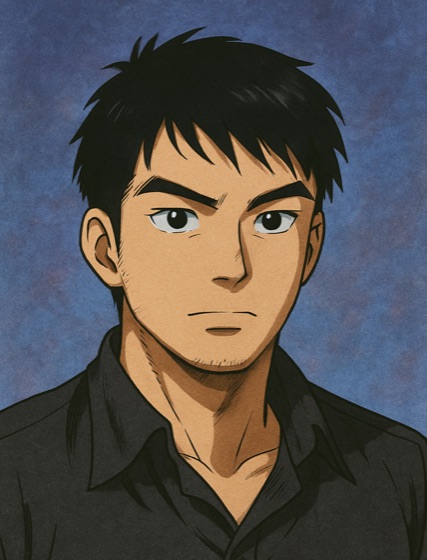
PhD Candidate, Committee on Computational Neuroscience, University of Chicago. Advised by Brent Doiron.
I study the mechanisms of computation and of perceptual, cognitive, and conscious experience in natural and artificial intelligent systems.
EmailScholarGitHubLinkedInXCV (PDF, October 2026)
I am Draco (Yunlong) Xu, a PhD candidate in the Computational Neuroscience (CNS) program at the University of Chicago, advised by Prof. Brent Doiron. I am also collaborating with Prof. Marlene Cohen’s lab and Prof. David J. Freedman’s lab. My research is supported by the Kavli Foundation.
Before moving to Chicago, I was an undergraduate at the University of Rochester, where I received two honors B.S. degrees in Computer Science and Mathematics, and a minor in Philosophy. I was advised by Prof. Fatemeh Nargesian (database and data management), Prof. Duje Tadin (Brain and Cognitive Sciences), Prof. Alex Iosevich (Applied Math), and Prof. Alison Peterman (Philosophy). I was affiliated with the CogT Lab at Stanford University, advised by Prof. Vankee Lin and Prof. Ehsan Adeli, and the CCNN Lab at SJTU, advised by Prof. Ruyuan Zhang. I was also founding chair of the University of Rochester ACM Student Chapter.
I studied as an undergraduate at Fudan University, majoring in Mathematics and Applied Mathematics, before transferring to the University of Rochester.
How does a brain — or any intelligent system — turn physical signals into computation, perception, and experience? I pursue that three ways: circuit and network theory for how populations of cortical neurons compute; the study of intelligence in artificial systems, treated as fully observable model organisms for the methods neuroscience will need; and tools that put AI inside the scientific workflow itself. Underneath sits an older question — where perception ends and cognition begins, and whether a machine could ever cross that line.
I build mechanistic theories of how populations of cortical neurons compute, and hold them to what electrophysiology and two-photon imaging actually record. The model is chosen per question rather than fixed in advance: rate-based dynamical-systems and geometric analysis, biologically realistic spiking networks, and statistical analysis of population activity, often within a single study. Current questions include why cortical variability is structured the way it is, how attention rotates a population code, and what computations require signals to pass between cortical areas rather than within one.
I study the principles of intelligence itself, in natural and artificial systems alike, and treat modern AI models as the ideal preparation for it — a system where every unit of activity and every weight is known and any perturbation is possible. Understanding the brain will require complete data, and AI is where that data already exists; by studying these systems we can invent, ahead of time, the methodological paradigms neuroscience will need once it can measure enough. In artificial neural networks I study how computation relates to the dynamical landscape, and what makes the flow of information through them optimal. Earlier work: learning the abstract rules behind human IQ-test problems, and training algorithms for spiking neural networks.
The AI for Science I care about lives inside the real scientific workflow — concretely, how AI can help us know and explain the world. Its anchor is Maieusis, my open-source system that turns an empirical dataset into families of questions that are both scientifically valuable and genuinely answerable, with claim ceilings, controls, and non-proceed decisions enforced through the architecture rather than through prompting. Alongside it I build direct AI-for-neuroscience tooling: methods to infer multi-area latent dynamics from population recordings, foundation-model decoding of brain activity, and scalable ways to construct and query networks from large, noisy time series.
A single philosophical question runs beneath all three: where perception ends and cognition begins, and whether an artificial system could ever genuinely have experience rather than only behave as if it does.
Six lines of work, running in parallel. The order is a reading order, not a ranking.
Maieusis
An open-source AI system that turns an empirical dataset into families of questions that are both scientifically valuable and genuinely answerable.
Inter-Areal Computation
What computations cannot be done by one cortical area, but require a multi-area circuit?
Balanced Cortical Networks
How cortical populations alternate between asynchronous states and brief epochs of coordinated activity.
Visual Attention & Representation
How correlated variability relates to flexible behavior, and what a top-down control signal actually does to a population code.
Retinal Noise Resilience
How distinct retinal cell types collectively achieve noise resilience across environments whose noise statistics differ by orders of magnitude.
V1 Behavioral Correlations
Which pathways carry uninstructed facial movement into V1 — and why the answer turned out to be both of them.
Journal, conference, and preprint work — a selection below.
Yu, P.*, Yoon, H. Y. A.*, Yang, Y.*, Xu, Y., Gozel, O., Tian, G. J., Ji, N. & Doiron, B. (2026). Convergence of cortical and thalamic origins of free behavior modulation of mouse primary visual cortex. bioRxiv, 2026.01.07.698022.
In review
Srinath, R., Xu, Y., Doiron, B. & Cohen, M. R. (in preparation). Coordinated response modulations enable flexible use of visual information.
Srinath, R., Xu, Y., Ruff, D. A., Ni, A. M., Doiron, B. & Cohen, M. R. (2026). The structure of correlated variability reflects task-relevant information in sensory neurons. Proceedings of the National Academy of Sciences, 123(28), e2523217123.
Dunworth, J. B.*, Xu, Y.*, Graupner, M., Ermentrout, B., Reyes, A. D. & Doiron, B. (2025). Interleaving asynchronous and synchronous activity in balanced cortical networks with short term synaptic depression. Nature Communications, 16, 8657.
Selected as a talk · SfN 2024 Nanosymposium · Rising Stars in Neuroscience 2025
Xu, Y., Yang, L., You, H., Zhen, Z., Wang, D.-H., Wan, X., Xie, X. & Zhang, R.-Y. (2023). RuleMatch: matching abstract rules for semi-supervised learning of human standard intelligence tests. Proceedings of the 32nd International Joint Conference on Artificial Intelligence (IJCAI), 1613–1621.
Xu, Y.*, Liu, J.* & Nargesian, F. (2022). TSUBASA: climate network construction on historical and real-time data. Proceedings of the 2022 International Conference on Management of Data (SIGMOD), 286–295.
* denotes equal contribution.
Grants, fellowships, and honors.
Second Place, AI for Science Hackathon
NIH R90, Training Program in Theory and Computation for Next Generation Neuroscientists
I have been awarded the Science and Society Sparks Program grant ($7,500 USD) from the Kavli Foundation, supporting my participation in the 2026 Sparks program this November and December.
I officially released Maieusis v0.1.0, an open-source AI system that turns scientific datasets into families of questions that are both scientifically valuable and genuinely answerable with the available data. Maieusis grew out of our award-winning prototype, Quaero, and has since been developed into a full research system with dataset-grounded planning, deterministic verification, and independent review.
Our paper “The structure of correlated variability reflects task-relevant information in sensory neurons” has been published in PNAS. It grew out of the preprint “Guided by Noise.”
Quaero, the prototype that later evolved into Maieusis, won Second Place at the AI for Science Hackathon hosted by Columbia University and Bloomberg. Quaero explored how AI systems could generate ambitious scientific questions while ensuring that those questions remain operationalizable with real datasets.
Our preprint “Convergence of Cortical and Thalamic Origins of Free Behavior Modulation of Mouse Primary Visual Cortex” is online now.
Ph.D., Computational Neuroscience
Committee on Computational Neuroscience · Advisor Brent Doiron · Advanced to candidacy December 2025
B.S. (Honors) Computer Science and B.S. (Honors) Mathematics
Minor in Philosophy
Mathematics and Applied Mathematics
Transferred to Rochester; no degree awarded
Trained as a stage actor with the Fudan Drama Troupe, and currently with the Windmill Chinese Drama Club in Chicago.
In Art We Live.
5812 South Ellis Ave.
MC 0912, Suite P-400
Chicago, IL 60637